Toaster Oven Wattage: What the Numbers Mean
Toaster oven wattage is the power the heating elements draw, so a higher number usually means the oven heats up faster. It says nothing about how even the browning is, so check the size and the fan before you compare two ovens.
On this page (10 sections)
- What wattage measures in a toaster oven
- Four toaster ovens and what their wattage means
- Why a higher wattage doesn't always mean better cooking
- Heat-up time: what the watts really change
- What lower and higher wattage mean for everyday use
- Reading the power line on the box
- Watts, outlets and cord safety
- How to compare wattage with size and features
- Reading wattage next to the rest of the spec sheet
- Which wattage should you look for in a toaster oven?
Wattage is the number that most toaster oven boxes print first. It's a measure of power, and it's useful for comparing how fast an oven heats up.
Our picks show a wide range, from 800 watts on a small Elite Gourmet to 1800 watts on the Cuisinart 8-in-1. The box or the maker's site gives the number, and the rest of this guide explains what it means for your cooking.
What wattage measures in a toaster oven
Watts measure the rate of power use. An oven with a higher wattage draws more power while its heating elements run, which generally heats the cavity faster.
Wattage tells you the speed of the heat, not the quality of the bake. Two ovens with the same wattage can brown food very differently.
Watts, volts and amps in plain terms
Amps equal watts divided by volts. A 1,800-watt oven on a 120-volt outlet draws about 15 amps while it heats.
That's a heavy load for one outlet, so plug the oven straight into the wall rather than a power strip. Follow the manual for the outlet and cord rules.
Four toaster ovens and what their wattage means
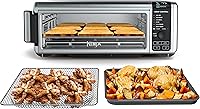
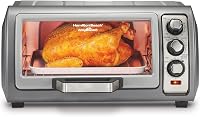
These four models show the range from the lowest to the highest rating in our picks. Each product box gives the wattage and what it means for everyday cooking.
Why a higher wattage doesn't always mean better cooking
Wattage shows how fast the oven can heat, but it doesn't show how evenly it browns. Fan design, element placement and the size of the cavity change the result as much as the watt number does.
How a fan changes the picture
A convection fan moves hot air around the food, so the fan matters as much as the wattage for browning. Check whether the oven has a fan before you compare two ovens by watts alone.
Our what is a convection toaster oven guide explains the fan in more detail. It shows which foods benefit most from moving air.
Heat-up time: what the watts really change
A higher wattage shortens the time it takes the oven to reach its set temperature. The gap is most visible when you're making a quick snack or a pizza on a weeknight.
Once the oven is hot, the wattage matters less, because the elements hold the air at the setting you chose. The size and the fan take over from there.
An 800-watt oven usually takes longer than an 1800-watt oven to reach the same temperature. Plan a few extra minutes on a lower-wattage oven before a timed bake.
What lower and higher wattage mean for everyday use
An 800-watt oven handles toast, reheats and a snack well, but a full tray will take longer. It's a good fit for a small counter and a short list of jobs.
An 1800-watt oven heats faster, which helps when you cook a pizza or roast on a weeknight. It also draws more power, so it needs a clean outlet and a little more care with the cord.
Reading the power line on the box
The power line is usually the first spec you'll see, and it can be printed on the box or listed on the maker's site. Some makers leave the rating out, as Black+Decker and Emeril Lagasse do for some models in our picks.
Look for the wattage, the volts and the cord length together. Those three numbers tell you how the oven will run on your outlet.
Watts, outlets and cord safety
A high-wattage oven needs a working outlet. Plug it straight into the wall, avoid sharing the outlet with other heavy appliances, and don't use an extension cord unless the manual allows it.
If the plug or cord feels hot, unplug the oven and stop using it until someone checks it. Heat at the plug is a sign that the connection needs attention.
Toaster oven wattage and your outlet
Match the oven to the outlet you'll use, and avoid sharing that outlet with a kettle or a microwave. A dedicated outlet at the counter keeps the load steady while the elements run.
How to compare wattage with size and features
Use wattage to judge how fast the oven heats, then use the interior size to see whether it fits your food. Our toaster oven size guide covers the sizes that fit common pans and pizzas.
The best air fryer toaster ovens roundup shows how wattage and features line up in real picks. Compare two or three models on the same features before you decide.
Reading wattage next to the rest of the spec sheet
Put the wattage next to the size, the functions and the warranty before you decide. A strong number on its own doesn't make an oven right for your counter or your food.
If two ovens are the same size and have the same features, the wattage can be the tie-breaker. The higher-wattage model usually reaches temperature faster, so it's the better pick for a busy kitchen.
For the wider buying picture, our air fryer toaster oven buying guide covers sizes, types and features in one place.
Which wattage should you look for in a toaster oven?
For toast and reheats, a lower rating can be enough, and the smaller ovens in our picks cover those jobs. If you cook pizza, roasts or air fry often, the 1500-watt to 1800-watt models in our picks have the power for it.
If an oven is running but not heating the way it should, read our toaster oven not heating checklist. It covers the settings, the outlet and how to check the real temperature.
Frequently asked questions
Is a higher wattage toaster oven better?
Higher wattage usually means faster heat-up, but it doesn't guarantee better browning. Check the interior size, the fan and the cooking functions as well, since they decide how the food turns out.
How many amps does a toaster oven draw?
Divide the watts by the volts. A 1,800-watt oven on a 120-volt outlet draws about 15 amps while the elements run, so it needs an outlet in good condition that isn't shared with other heavy loads.
Can I plug a toaster oven into an extension cord?
Plug it straight into a wall outlet when you can. Follow the manual's cord rules, since many manuals advise against extension cords for heating appliances.
Does wattage change the electric bill?
A toaster oven uses power only while it heats, and a shorter cook time uses less energy. Compare the cook times you use most, not just the watt number on the box.